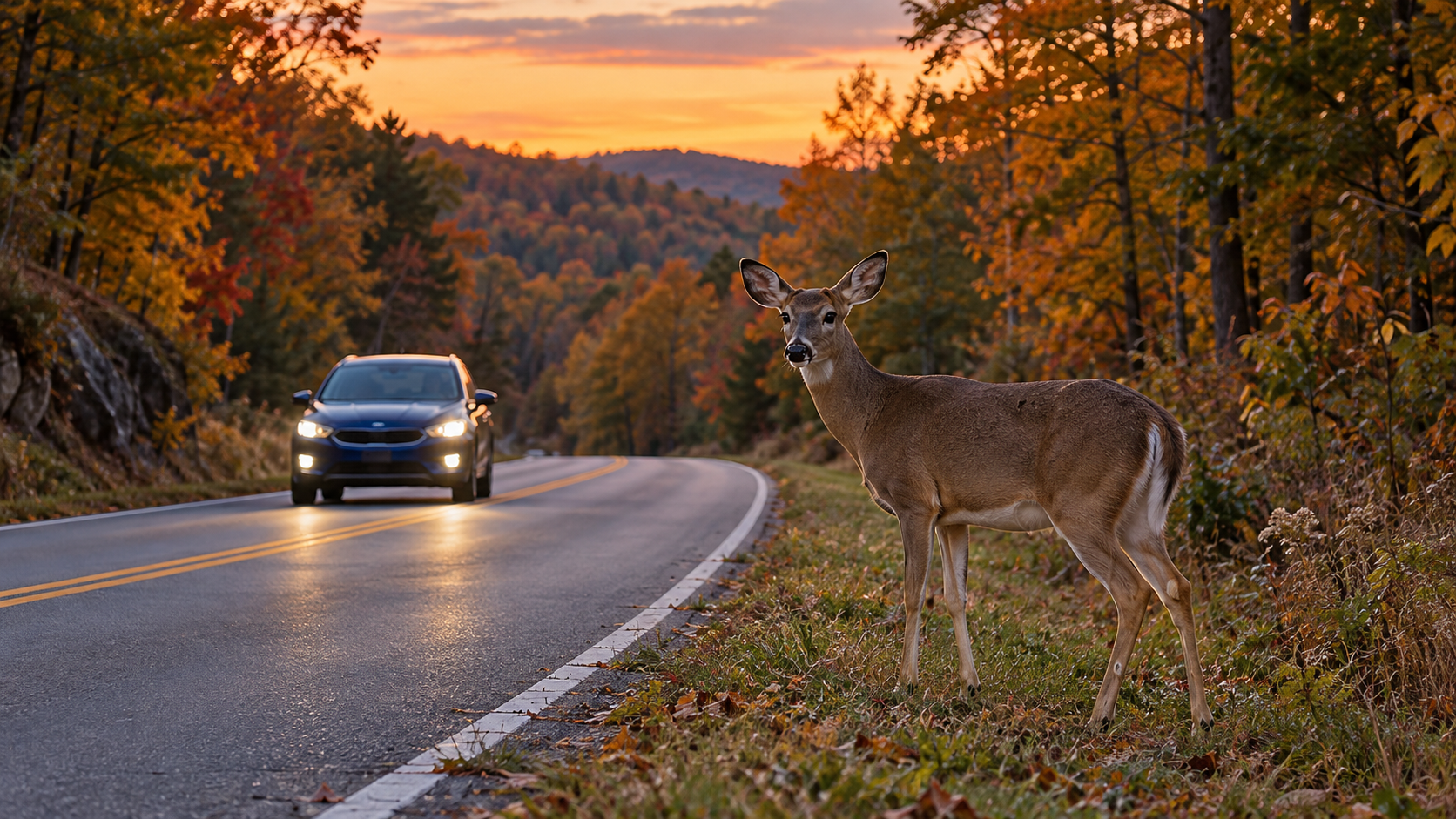
You’re driving home on a road you know well. The sun has nearly set when a deer steps out from the shoulder. You brake, but it’s too late. There’s contact.
First, you check to make sure you’re okay. Once safely off the road, another question hits: Will insurance pay for the damage?
Damage from directly hitting a deer is typically covered by comprehensive coverage, provided you have it on that vehicle. Liability insurance alone, however, generally won’t pay to repair your own car after an animal collision. Your deductible and policy terms affect what you’ll receive.
Fall makes this a timely coverage check. In its September 2026 animal-collision report, State Farm noted that these crashes happen more often in fall, when deer are more active.
The risk varies by location, but you don’t have to live in a deer-heavy area for this information to matter. A weekend trip can take you onto unfamiliar roads, and comprehensive coverage generally applies to direct collisions with other animals too.
Here’s what to understand before you need to use your policy.
The Coverage That Matters When You Hit a Deer
Despite its name, comprehensive doesn’t cover everything. It generally helps pay for vehicle damage from events such as theft or hail. Still, in this case, direct contact with a deer is another situation it typically covers.
Progressive explains that animal strikes generally fall under comprehensive coverage, while liability-only insurance generally leaves damage to your own car uncovered.
Open your insurance app or find your declarations page, the summary of your policy. Look under the vehicle you drive for “comprehensive” or “other than collision.”
If your household has several cars, check each one. Don’t assume the coverage on one vehicle matches the others.
It’s also worth looking beyond the phrase “full coverage.” As Allstate explains, that phrase commonly describes a combination of coverages, rather than a specific insurance product. The actual coverage names on your policy give you a clearer answer.
If you can’t find them, ask your agent or insurer to confirm what’s currently included.
Hitting a Deer and Swerving Around One Are Different
This is where the terminology can trip you up. Your car collides with a deer, yet comprehensive coverage typically applies.
Now imagine you avoid the deer but hit a guardrail. Damage to your car would generally fall under collision coverage instead.
The difference is what happened:
- Your vehicle makes direct contact with the deer: typically a comprehensive claim.
- You miss the deer but hit another vehicle or object: typically a collision claim.
Both depend on having the applicable coverage and meeting your policy’s terms.
You may have one coverage without the other, so you should review both. Knowing you’re protected against a direct animal strike doesn’t establish how a different crash would be handled.
For driving safety, State Farm recommends braking firmly and staying in your lane when possible. Swerving can cause you to lose control or hit another vehicle. The insurance distinction helps explain your policy. Of course, your immediate priority on the road is avoiding a more dangerous crash.
Your Deductible Determines Your Share of the Cost
Even with coverage, you’ll usually have some responsibility for the repair bill. Your deductible is the portion of a covered claim you pay.
Suppose a covered deer accident causes $3,000 in repair costs and your comprehensive deductible is $500. You would generally be responsible for $500, with insurance paying the remaining $2,500, subject to the settlement and policy terms.
With a $1,000 deductible, your share would be larger. This means if covered repairs cost less than your deductible, there generally wouldn’t be an insurance payment for those repairs.
Allstate’s deer-accident guide explains how the deductible applies to a covered animal strike.
Check your comprehensive deductible specifically. It may differ from your collision deductible.
Then consider whether you could comfortably pay that amount after an unexpected accident. A deductible that helped lower your premium may feel different when the repair shop needs payment.
Unsure what coverage or deductible to choose for your next policy?
Rental Reimbursement May Require Separate Coverage
Repair coverage doesn’t automatically solve how you’ll get to work while your car is in the shop.
Rental reimbursement is an optional coverage that can help pay for a rental after a covered accident. It generally has limits on the amount paid per day and the total benefit.
If you depend on your car daily, ask whether this coverage is included and what those limits are. A covered repair can still leave you with transportation expenses.
Injury expenses are another separate question. Comprehensive and collision address vehicle damage. Medical payments coverage or personal injury protection may help with medical costs, depending on your policy and state.
What to Do After a Deer Collision
Start with safety. Move to a safe location if possible and turn on your hazard lights. Call emergency services if anyone is injured.
Stay away from the deer. An injured or frightened animal can be dangerous, even if it appears still.
Once it’s safe, photograph the damage and note where the collision happened. Contact local authorities if the animal is creating a road hazard or you’re unsure about reporting requirements.
Your car may start without being safe to drive. Leaking fluid or damaged tires are warning signs. A hood that won’t latch securely also needs attention. When there’s doubt, arrange a tow rather than continuing the trip.
State Farm’s guidance on what to do after hitting a deer recommends documenting the incident and contacting your insurer promptly.
Ask your current insurer how to proceed with the inspection and repairs. If the accident has already happened, that’s the company to contact about the claim. Shopping for a new policy is a separate conversation about future protection.
Compare the Coverage Alongside the Price
A useful policy review leaves you with the knowledge of whether your car has comprehensive and collision coverage. You should also understand the deductibles and whether you’d have help paying for a rental.
Ask about anything that remains unclear. For example, an animal claim’s effect on your premium can depend on your state and insurer. There simply isn’t one answer for every driver.
When comparing quotes, request comparable coverages and deductibles. Otherwise, a lower price could reflect less protection or a larger amount you’d need to pay yourself.
For a broader look at comparing your options, see our guide to Choosing the Right Insurance Policy: What Every Smart Shopper Should Know.
The sometimes harsh reality is that a deer can appear before you have time to think through the situation. Understanding your coverage beforehand gives you one less question to sort out afterward.